
Before It Was a Betting Event, It Was a Spectacle
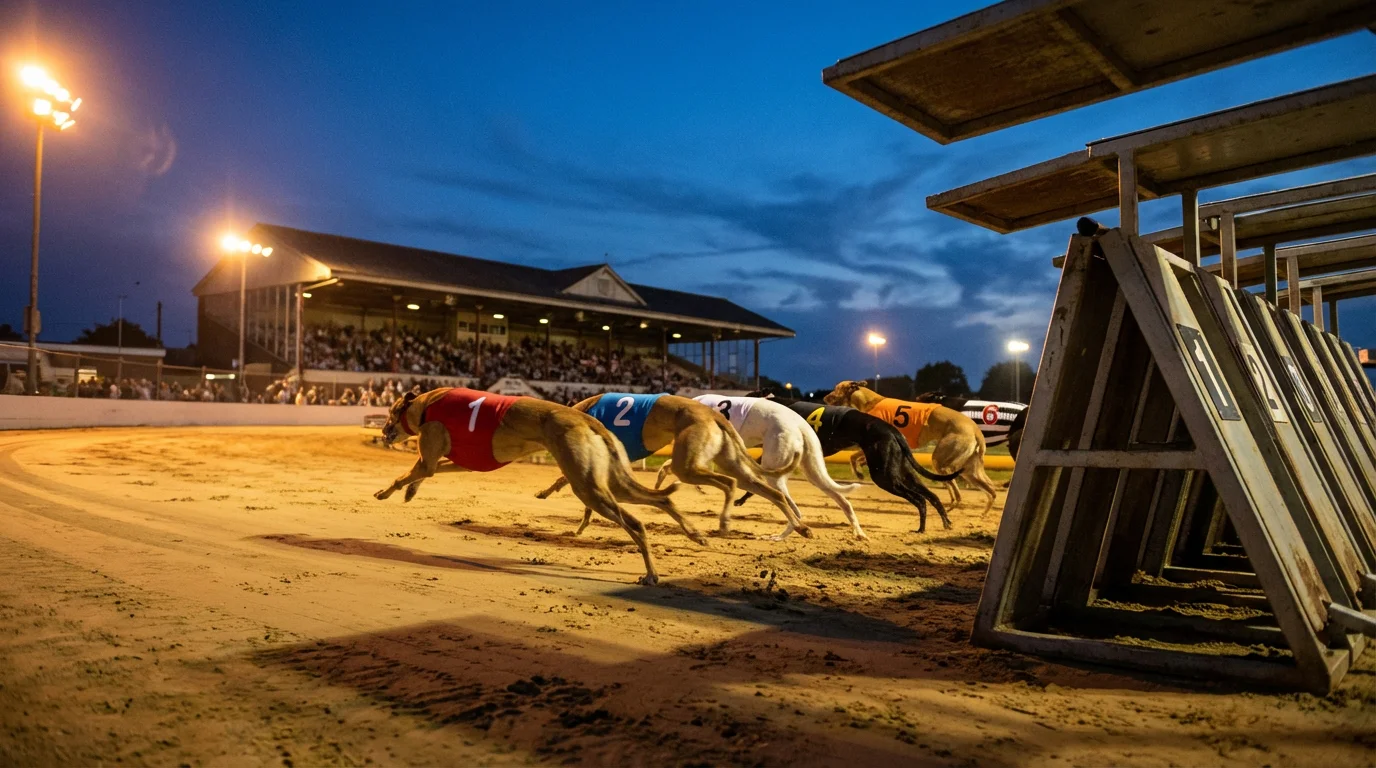
The Greyhound Derby didn’t start as a betting product — it started as theatre. When the first final was run in 1927, the idea of six dogs chasing a mechanical hare around a sand track was still a novelty to most of Britain. Crowds came to stare, not to study form. There were no ante-post markets, no sectional times, no debate about which trap favoured which running style. There was just the spectacle: fast dogs, loud noise, and the strange thrill of watching something entirely unpredictable unfold in less than thirty seconds. Learn more about the Derby at greyhoundderbyfinal.
Nearly a century later, the English Greyhound Derby has outlived two world wars, the closure of every stadium that originally hosted it, the slow decline of trackside attendance across the UK, and repeated predictions of its own irrelevance. It remains the richest and most prestigious greyhound race in Britain, carrying a first prize that now stands at £175,000 and attracting entries from the top kennels in England, Ireland, and beyond. The betting handle on Derby final night dwarfs any other night in the greyhound calendar.
But what makes the Derby’s history worth understanding isn’t just sentimental attachment. The race has been shaped by the tracks it has moved between, the dogs that elevated it, and the trainers who turned it into a strategic competition rather than a lottery. Each of those factors still affects how punters should approach the race today. Understanding where the Derby has been is not a detour from betting on it — it is the foundation.
This is the story of how a novelty event at a repurposed Olympic stadium became the single most important night in British greyhound racing — and why the lessons embedded in that history still matter to anyone thinking of having a bet on the next final.
White City 1927: The First Final
White City Stadium, built for the 1908 Olympics, became the birthplace of greyhound racing’s most important night. The venue had already proved that Londoners would pay to watch athletic spectacle in large numbers, and when the Greyhound Racing Association needed a flagship venue for the sport’s first major competition, the choice was obvious. White City offered capacity, prestige, and — crucially — access to the kind of crowds that could turn a niche sport into a mass entertainment.
The first English Greyhound Derby final was held on 15 October 1927. The format was a knockout competition modelled loosely on the Epsom Derby, which gave the event both its name and its aspirational framing. Entry Badge, trained by Joe Harmon, won the inaugural final at odds that barely anyone bothered to record with much precision. What mattered was that the race worked. Six dogs ran, a winner crossed the line, and the crowd left wanting more.
The early years were chaotic by modern standards. Timing technology was rudimentary, the hare mechanism was unreliable, and the dogs themselves were inconsistent performers whose form bore little relation to what would happen on any given night. But the Derby quickly established something that ordinary graded racing could not — a narrative arc. The knockout structure meant that every dog had to survive multiple rounds, and the process of elimination created natural storylines. By the time the final arrived, the surviving six had earned their place, and the crowd had developed opinions about which dog deserved to win.
That structure has remained essentially unchanged for nearly a hundred years, and it is one of the reasons the Derby retains its appeal even as overall greyhound attendance has declined. A six-dog final at the end of a multi-week competition is inherently dramatic. The format doesn’t just test speed — it tests durability, consistency, and the ability to perform under escalating pressure. The dogs that win the Derby tend to be the ones that replicate their form round after round, not the ones that produce a single explosive time in a heat and then regress.
From a betting perspective, that structural fact has implications that still hold. Derby winners are not usually drawn from the fastest single performance in the competition — they are drawn from the dogs that ran near their best in every round. This is a pattern that White City established in 1927 and that Towcester continues to demonstrate in the 2020s. The format shapes the market, and the market reflects the format.
The First Decade and Mick the Miller
By 1929, Mick the Miller wasn’t just a greyhound — he was a national celebrity. Born in Ireland and trained by Mick Horan before moving to Paddy McEllistrim’s English kennel, Mick the Miller won the Derby in 1929 and again in 1930, becoming the first dog to defend the title. His fame extended well beyond the track. He appeared in a feature film, drew crowds to White City that rivalled football attendances, and was eventually preserved by taxidermy after his death in 1939 — his body displayed at the Natural History Museum in Tring, where it remains.
Mick the Miller’s significance to the Derby was not just commercial. He demonstrated that a greyhound could sustain peak form across the gruelling competition schedule, and his consecutive victories established a standard against which every future champion would be measured. The idea that the Derby was not merely a race but a campaign — something requiring sustained excellence rather than a single brilliant performance — was crystallised by his dominance.
The first decade of the Derby also saw the event embedded into the wider culture of British leisure. Greyhound racing was booming: by the early 1930s, tracks had opened across England, Scotland, and Wales, and total annual attendance was running into tens of millions. The Derby sat at the apex of this pyramid, offering a single night of elite competition that the sport’s growing audience could focus on. It was the Cheltenham Gold Cup of greyhound racing before Cheltenham itself had fully assumed that status in the horse racing world.
For the modern punter, the first decade matters because it established the Derby’s identity as a race that rewards a particular type of dog — the consistent, adaptable, round-by-round improver. Mick the Miller was not the fastest greyhound ever timed at White City. He was the one who kept producing when it mattered. That distinction continues to define what winning the Derby requires.
The Golden Age: Post-War Popularity
Seventy million attendances in 1946 — greyhound racing was second only to football in the British sporting landscape. The post-war years transformed the Derby from an important race into a genuine national event. Rationing was still in force, leisure options were limited, and an evening at the dogs offered something that most other entertainments could not: affordable excitement with the possibility of walking home richer than you arrived.
The Derby of this era was a stadium event in the fullest sense. White City regularly drew capacity crowds for final night, and the atmosphere was closer to a cup final than a routine card. The dogs that won during this period — Patricia’s Hope in 1972 and 1973, Pigalle Wonder in 1958 and Mile Bush Pride in 1959 — became household names in a way that is difficult to imagine today. Their victories were covered in national newspapers, not just the sporting press, and their trainers were recognised figures whose opinions were sought on radio and eventually television.
Patricia’s Hope deserves particular attention. Trained by Adam Jackson, he won the Derby in consecutive years — only the second greyhound to achieve the double, and the first since Mick the Miller. His 1972 victory came at 7/1, which in a six-runner final suggested a competitive field. He returned the following year as a clear favourite, won again, and retired with a racing record that placed him among the all-time greats. The market’s treatment of his second campaign — shortening from a generous opening price to a tight favourite — illustrated a pattern that recurs in Derby betting: the ante-post market often underestimates dogs with proven Derby form.
The golden age also saw the professionalisation of greyhound training and breeding. The era of amateurs keeping a couple of dogs in their back garden and entering them in the Derby was fading. By the 1960s and 1970s, the top Derby kennels were running sophisticated operations — selective breeding, structured race schedules, deliberate campaign planning that mapped a dog’s season around the Derby calendar. This shift mattered for betting because it made form more readable. A dog prepared for the Derby by a professional kennel was no longer a mystery — it was a project, and a well-informed punter could track the project’s progress through graded races and open events in the months before the competition began.
Attendance peaked and then began to decline through the 1970s and early 1980s, as television expanded viewing options and other forms of gambling — bingo halls, betting shops with horse racing feeds — drew the casual leisure audience away from the tracks. But the Derby itself remained robust. Its stature within the sport actually increased as the broader industry shrank, because the final became one of the few nights each year when greyhound racing commanded attention beyond its core audience. That dynamic persists today — the Derby final punches above the sport’s weight in the wider betting market.
The Venue Journey: White City to Towcester
When White City closed in 1984, the Derby became a nomad — and it hasn’t fully settled since. The loss of White City was not just logistical but symbolic. The stadium had hosted the Derby from 1927 to 1984, and its closure reflected the broader squeeze on urban greyhound tracks as land values in London and other cities made redevelopment more profitable than continuing to host racing. White City was demolished to make way for a BBC facility, and the Derby needed a new home.
The immediate solution was Wimbledon Stadium, which became the Derby’s base from 1985 until the track’s own closure in 2017. During this period, the Derby also made brief visits to other venues. The 2000 final was held at Wimbledon as planned, but disruptions caused by foot-and-mouth disease affected scheduling in 2001. Through it all, Wimbledon provided the continuity that the competition needed, hosting the majority of finals during its three-decade tenure.
Each venue change altered the racing characteristics that punters had to account for. White City was a large-circumference galloping track that suited long-striding dogs with sustained pace. Wimbledon was tighter, with more demanding bends that rewarded dogs who could negotiate turns without losing ground. The shift in venue was not cosmetically neutral — it changed the type of dog that the Derby favoured, which in turn changed the way the market priced contenders.
The move to Towcester in 2017, after Wimbledon’s closure, brought another set of adjustments. Towcester is a 500-metre sand track in rural Northamptonshire, a very different proposition from the urban stadiums that had previously hosted the race. The surface is deeper, the bends are sweeping, and the track geography means that early pace and trap position carry different weights than they did at Wimbledon. For bettors, the lesson is evergreen: when the venue changes, the form book needs recalibrating.
The nomadic nature of the Derby is occasionally cited as a weakness, and there is some validity to the concern that the race lacks a permanent spiritual home. But from a betting standpoint, the venue shifts have actually made the competition more analytically interesting. Each move forced a re-evaluation of what constitutes a Derby dog — which running styles suit the track, how sectional times translate, and whether historical patterns from previous venues carry forward. Punters who adapted quickly to each transition had a window of advantage before the market caught up.
The Wimbledon Years (1985–2016)
Wimbledon gave the Derby three decades of continuity — and some of its greatest finals. The stadium in south-west London was already one of the premier greyhound tracks in Britain when it inherited the Derby, and its tight, pear-shaped 480-metre circuit put a premium on early pace and first-bend positioning that shaped Derby betting for an entire generation of punters.
The Wimbledon era produced several landmark moments. Westmead Hawk’s back-to-back victories in 2005 and 2006 stand out — the last dog to defend the title successfully, trained by Nick Savva, who campaigned the dog with surgical precision across two full Derby schedules. Rapid Ranger, trained by Charlie Lister, won in 2000 and 2001 and set a standard of dominance during the heats that saw his price collapse from a generous ante-post quote to prohibitive favouritism by final night. The lesson for punters: the market is often slow to price in round-by-round improvement during the competition itself.
The Wimbledon years also coincided with the rise of Irish-trained challengers as a serious force in the Derby. Historically, Irish entries had been sporadic and largely unsuccessful. From the 1990s onward, the flow of talent from Irish kennels — particularly those connected to the thriving coursing and independent track scene — became a torrent. By the time Wimbledon closed, Irish-bred and Irish-trained greyhounds had won multiple Derbies, and ignoring Irish entries in the ante-post market had become a costly oversight.
Wimbledon’s closure in 2017 — the stadium sold for redevelopment into housing by Galliard Homes — marked the end of an era that many in the sport regarded as definitive. The track had hosted thirty-two finals and become synonymous with the Derby in the minds of a generation of fans and bettors. Its loss forced the sport to confront the same question that White City’s demolition had posed: can the Derby survive detached from its most familiar home?
Towcester and the Modern Era (2017–Present)
Towcester isn’t White City — but it doesn’t need to be. When the Northamptonshire track took over as the Derby’s host in 2017, expectations were cautious. The venue was smaller, geographically remote compared to London, and unproven as a home for the sport’s showpiece event. The first Towcester Derby was won by Astute Missile, trained by Seamus Cahill at Hove, whose victory at 28/1 suggested the market was still adjusting to the new venue’s characteristics.
Since then, the Towcester era has established its own identity. The 500-metre sand track places different demands on the dogs than Wimbledon’s tighter circuit did. Towcester’s bends are wider, which tends to reduce the advantage of early pace and increase the importance of sustained speed through the middle section of the race. Dogs that ran prominently at Wimbledon because they could grab the first bend often find Towcester less forgiving of one-dimensional speed.
The Derby briefly moved to Nottingham in 2019 and 2020 during a period of administrative upheaval at Towcester, which entered administration before being rescued and restored. That interruption, while disruptive, actually reinforced a lesson from earlier in the Derby’s history: the race adapts to its venue, and the best punters adapt with it. When the competition returned to Towcester, the market had to recalibrate once more, and the early rounds of the first post-return Derby offered opportunities for those who had paid attention to how the track played before the break.
The modern era has also seen a significant increase in broadcast and streaming coverage. Derby finals are available on SIS Racing and through bookmaker live streams, giving the event a reach that offsets the reduction in on-track attendance. For the betting market, this means more data, more pre-race analysis from pundits, and sharper prices that reflect faster information flow. The venue has changed, the surface has changed, the coverage has changed — but the type of dog that wins the Derby has remained remarkably stable across every era.
Dogs That Defined the Derby
Four dogs have won the Derby twice — and each did it differently. Mick the Miller did it through raw celebrity and a talent that transcended the sport’s early imprecision. Patricia’s Hope did it through meticulous training and a campaign approach that treated the Derby as a long-range target rather than a single-night gamble. Rapid Ranger did it with a devastating combination of early speed and middle-distance power that left the opposition racing for second. Westmead Hawk did it by peaking at precisely the right moment in two consecutive years, a feat of conditioning that remains the gold standard for modern Derby campaigns.
Westmead Hawk’s double in 2005 and 2006 is worth examining in detail, because it illustrates everything that separates a Derby winner from a merely fast dog. Trained by Nick Savva, Hawk was not the fastest greyhound of his generation on raw time. What he was, consistently, was the best over 480 metres under pressure. His heat performances in both campaigns were controlled rather than spectacular — he ran close to his best, without producing the kind of explosive times that would have shortened his final-night price to unbackable levels. When the final arrived, he had more left than the dogs that had been running flat-out to qualify. That ability to pace a campaign is the common thread linking every dual Derby winner.
Single-Derby winners have left their marks too. Ballyregan Bob, trained by George Curtis, became a household name between 1985 and 1986 as part of a record-breaking winning streak that reached thirty-two consecutive victories. His fame extended beyond racing circles — he met the Prime Minister, Margaret Thatcher, at Downing Street and became one of the few greyhounds to achieve genuine public recognition in the television age. From a form perspective, Ballyregan Bob was unusual because his superiority was so complete that he distorted the market. Betting on the other five dogs in his heats was essentially dead money, and the final was a procession. The market reflected this accurately — his odds were prohibitively short — which made him a poor betting proposition despite being the best dog in the race. That tension between quality and value is a permanent feature of Derby betting.
More recently, the Irish-bred dogs have produced some remarkable Derby champions. Jaytee Jet, Lenson Panda, and Droopys Plunge in 2025 represent a pipeline of talent from Ireland that has reshaped how the ante-post market forms. Irish dogs arriving in England for the Derby often have form from different track configurations and surfaces, making direct comparison with English-trained rivals difficult in the early rounds. This opacity creates both risk and opportunity — punters who can decode Irish form and translate it to the Derby venue often find prices that overestimate the challenge of the transition.
The dogs that defined the Derby share one trait regardless of era: they performed at their best when the stakes were highest. That is not a sentimental observation. It is a verifiable pattern in the form book, and it should inform how punters assess contenders every June. The dog that wins its heat by six lengths and then fades in the semi is a less reliable Derby bet than the one that wins each round by a neck, precisely when it needs to.
The Trainers Behind the Trophies
Charlie Lister won seven Derbies — nobody else has more than three. That statistic alone makes Lister the dominant figure in Derby history, but the manner of his dominance is what matters for understanding the race. Lister’s approach was systematic: he identified dogs early, campaigned them through graded and open races to build race fitness, and peaked them for the Derby weeks rather than burning them out in the spring. His seven winners spanned from 1997 to 2013, a period during which he was the default favourite’s trainer in most ante-post markets. Betting against a Charlie Lister-trained dog in the Derby was possible, but you needed a good reason beyond simply wanting longer odds.
Graham Holland has emerged as the most significant Irish trainer in the modern Derby. Holland’s method involves entering multiple dogs in the competition, spreading his chances across the draw, and relying on the quality of his kennel depth rather than backing a single champion. This approach is tactically sound in a knockout competition, because it increases the probability that at least one of his runners survives to the latter stages. For punters, the implication is straightforward: when Holland enters four or five dogs, at least two of them usually merit serious consideration in the ante-post market. Dismissing the lot because none is the obvious star is a mistake that the market routinely makes in the opening weeks of the competition.
Patrick Janssens, based in Belgium, has provided two Derby winners and represents the increasingly international flavour of the competition. Janssens’ dogs tend to arrive with limited English form, which makes them difficult for the market to price accurately. His first winner shocked the ante-post lists. His second was less of a surprise, because attentive punters had learned to take his entries seriously regardless of their profile in the British form book.
The broader pattern is clear: Derby-winning trainers are not one-hit wonders. They return, year after year, with dogs specifically prepared for the competition. This is the most actionable piece of historical information for the modern punter. When reviewing the entry list for any given Derby, the first filter should be trainer record. A dog trained by someone who has won or placed in the Derby before enters the competition with a structural advantage — not because the trainer has a magic formula, but because they have navigated the campaign’s demands before and know how to manage a dog’s energy, health, and peak timing across six weeks of elimination racing.
Trainer form does not guarantee a winner, obviously. But it narrows the field. And in a competition where 192 dogs become six, any reliable method of narrowing is an edge.
A Race That Keeps Rewriting Itself
The Derby doesn’t trade on nostalgia — it earns its relevance every June. That might seem like an odd claim about a race with nearly a century of history, but the evidence supports it. The competition has survived three major venue changes, each of which required the sport to essentially rebuild the event’s identity from the ground up. It has weathered the decline in trackside attendance, adapted to the rise of off-course betting, and maintained its status as the sport’s premier event despite the broader commercial pressures that have closed hundreds of UK greyhound tracks since the 1960s.
What the history reveals, more than anything, is a competition that selects for a particular kind of excellence. The Derby does not reliably reward the fastest single performance in the draw. It rewards consistency across rounds, adaptability to race-night pressure, and the kind of deep conditioning that allows a dog to produce near its best four, five, six times in succession over the course of a few weeks. Mick the Miller demonstrated this in 1929. Westmead Hawk confirmed it in 2006. The dogs that will contest the next final will be judged by the same standard, whether they know it or not.
For the punter, the practical takeaway from nearly a hundred years of Derby history is a set of filters. Prioritise dogs with consistent form across rounds over those with a single electric time. Respect the trainers who have been here before. Acknowledge that the venue shapes the race and that form from other tracks requires translation, not blind acceptance. Treat the ante-post market as an opportunity that narrows as the competition progresses — the best value is almost always available before the first heat is run. Also read our greyhound Derby past winners and results.
And remember the fundamental nature of the event. Six traps, 500 metres, a mechanical hare, and twenty-eight seconds of controlled chaos. The Derby reduces everything to its simplest possible form — and that simplicity is precisely what makes it endlessly complex to bet on. Every dog in the final has survived the same gauntlet. The one that wins will be the one that handles the specific, unrepeatable conditions of that particular night. History can prepare you for that moment. It cannot predict it. That is the honest truth of the Greyhound Derby, and it is the reason the race has survived everything that has been thrown at it since 1927.
