The Draw Matters — But Not the Way Most People Think
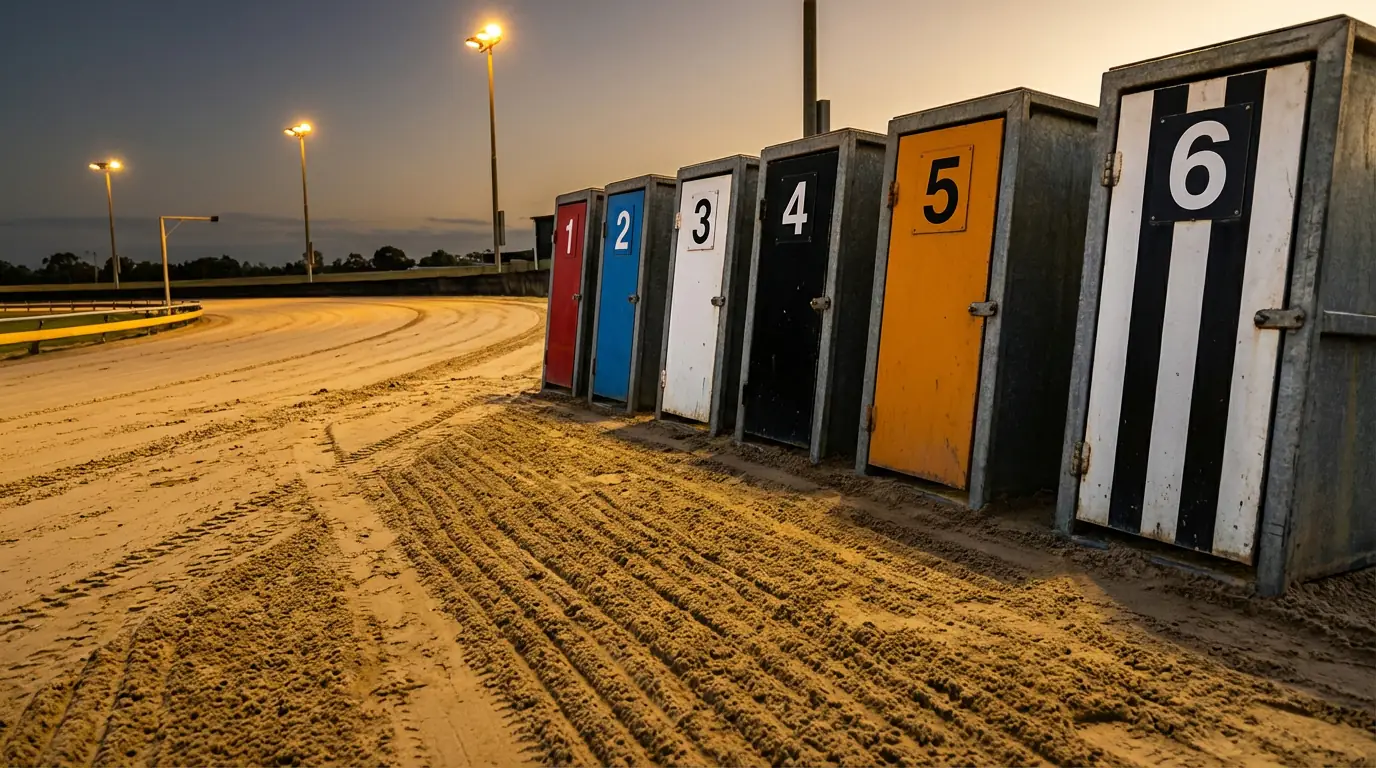
Every Greyhound Derby final begins before the lids go up — it begins with the trap draw. Six dogs, six boxes, and a first bend that arrives roughly five seconds into a twenty-nine-second race. Where a dog starts determines its path to that bend, and the path to the bend shapes everything that follows. Yet trap draw is one of the most misunderstood factors in Derby betting, treated by some punters as irrelevant noise and by others as the only thing that matters.
The truth sits between those extremes. Trap position creates advantages and disadvantages that interact with a dog’s running style, the composition of the field, and the specific geometry of the track. At Towcester, where the Derby has been held since 2017 (with the exception of two years at Nottingham), those interactions produce patterns that are visible in the data and useful for anyone pricing up the final. This article breaks down what the trap draw actually tells you — and where it stops telling you anything at all.
Derby Final Win Rates by Trap: What the Numbers Say
Across the full history of the English Greyhound Derby, no single trap dominates conclusively. Every box from one to six has produced winners, and the overall distribution is flatter than casual fans tend to assume. That said, the data is not perfectly even, and the imbalances become more pronounced when you segment by venue era rather than looking at the entire 1927-to-present dataset as a single block.
At Wimbledon, where the Derby ran for thirty-two years on a tight 480-metre circuit, traps one and two showed a measurable advantage. The first bend came quickly and on a sharp radius, rewarding dogs that broke fast from the inside and could claim the rail without interference. Over that three-decade sample, inside traps produced roughly 40% of winners — a meaningful overrepresentation in a six-trap field where the expected rate would be 33%.
Towcester’s 500-metre course tells a different story. The wider bends and longer run to the first turn give middle and outside draws more room to find position without crowding. Early data from the Towcester era — admittedly a smaller sample — suggests that the inside-trap advantage has reduced, with traps three and four producing a slightly higher share of winners than the historical average would predict. Trap six, the widest draw, remains the least favoured position across all eras, though it has produced memorable winners including Westmead Hawk’s 2005 victory from the outside at Wimbledon.
The key statistical point is that trap bias exists but is modest. In a six-runner field, the difference between the most and least favoured trap historically is roughly five to eight percentage points of win rate — enough to shift your assessment at the margins, not enough to override superior form. A dog with demonstrably better heat times, better consistency, and a better running style will overcome a poor draw more often than a limited dog will benefit from a good one.
What the numbers consistently show is that the draw compounds with running style far more than it does with raw ability. An early-pace railer drawn in trap one is in its element. The same dog drawn in trap five faces a fundamentally different tactical challenge — wider to the first bend, more traffic to navigate, more ground to make up if it doesn’t break cleanly. That interaction, not the trap number in isolation, is where the betting value lies.
Trap-by-Trap Breakdown at Towcester
Towcester’s 500-metre course starts with a reasonable run to the first bend — longer than Wimbledon’s, shorter than some provincial tracks. The bend itself is wide by UK standards, which means inside dogs don’t get the same automatic rail advantage they enjoyed at the old Plough Lane circuit. Understanding how each trap position plays out on this specific track is essential for Derby betting.
Trap one puts a dog on the rail from the start. If the dog breaks well and has natural early pace, it can claim the inside line through the first bend without a fight. The risk is crowding from traps two and three — faster dogs from those positions can squeeze a slow-starting trap-one runner into the rail, killing its momentum. At Towcester, trap one rewards dogs with sharp box speed above everything else. If your selection needs a stride or two to find its legs, the rail start amplifies that weakness rather than compensating for it.
Traps two and three are the positions most trainers want in a Towcester final. Both offer proximity to the rail without being locked on it, and dogs from these draws have the tactical option of going inside or holding a middle line through the first turn. The data from recent Derby campaigns bears this out — these traps have produced a disproportionate share of finalists who ran prominently from the first bend onwards.
Trap four is the pivot position. A dog here can go either way — angle towards the rail if the inside runners fade, or drift wide if the pace is set from the outside. It suits versatile runners with the intelligence to adjust their line mid-race, a quality that not all greyhounds possess but that Derby finalists, having survived weeks of varied draws in earlier rounds, are more likely to demonstrate than average graded dogs.
Trap five is wide enough to face traffic problems if the dog doesn’t possess genuine early speed. At Towcester’s first bend, a trap-five runner needs to be among the first three into the turn or it risks being shuffled back and forced to race wide through the second and third bends. This is the draw that separates dogs with authentic pace from those whose fast times came from easy leads in less competitive heats.
Trap six is daylight — the widest draw, with no dog outside to interfere but the longest path to the first bend. Historically the least successful position in Derby finals, trap six demands a combination of raw speed and the stamina to sustain a wider racing line over 500 metres. Dogs drawn here effectively run further than those on the inside, and at Towcester the extra ground is magnified by the wider bends. A trap-six winner in a Derby final is almost always an exceptional animal, not a lucky one.
How Trap Draw Should Influence Your Derby Bets
The draw is best used as a modifier to your existing form assessment, not as a starting point. If you’ve identified two dogs with similar form profiles going into the final, the draw becomes a useful tiebreaker — the one with the more favourable box for its running style gets the nod. But backing a dog purely because it drew trap two, or dismissing one because it drew trap six, ignores the form evidence that matters more.
For each-way betting, trap draw has a specific application. Dogs drawn in traps one to three have historically higher place rates at Towcester because the inside line through the first bend keeps them in contention even when they lack the pace to win outright. If you’re considering an each-way bet on a dog priced at 6/1 or longer, an inside draw strengthens the place case significantly. A wide draw on the same dog weakens it, because the risk of being shuffled back at the first bend reduces the probability of finishing in the top two.
Forecast and tricast bettors should pay particular attention to how the draw interacts with running styles across the full field, not just for individual dogs. A final with two natural railers drawn in traps one and two creates likely early crowding on the inside — which benefits a fast dog in trap three or four that can take advantage of the space created by the rail battle. Reading the draw as a collective tactical map, rather than dog by dog, gives you a much better foundation for predicting finishing order.
The trap draw for the Derby final is typically announced two or three days before the race. The market reacts immediately — prices shorten on well-drawn runners and drift on those perceived to have unfavourable boxes. That reaction is generally rational but occasionally excessive, particularly for trap six, where the automatic drift can push a genuinely talented dog out to prices that overstate the disadvantage. If your pre-draw assessment had a trap-six runner as a strong contender, the post-draw price drift may hand you value that wasn’t there before.
The Draw Is a Factor, Not a Verdict
Trap draw is one variable among several that determine the outcome of a Greyhound Derby final, and it deserves to be weighted accordingly — neither ignored nor overvalued. The data confirms that inside draws carry a modest statistical advantage across the competition’s history, but it also confirms that the advantage is small enough to be overridden by superior form, better early pace, and the kind of race intelligence that separates Derby-calibre dogs from the rest.
The punters who use trap draw most effectively are the ones who combine it with running-style analysis. They don’t ask “which trap wins most?” — they ask “how does this specific dog’s preferred racing line interact with this specific draw in this specific field?” That question requires more work than scanning a win-rate table, but it produces far sharper assessments.
When the draw is announced for the next Derby final, resist the temptation to redraw your entire betting plan around it. Adjust at the margins. Look for mismatches between a dog’s style and its draw that the market might be underpricing. And remember that the lids go up equally fast for all six traps — what happens in the next twenty-nine seconds depends on far more than a number on a jacket.
