
Every Market in One Place
Greyhound racing offers a broader range of bet types than most casual punters realise. Beyond the straightforward win bet, there are place bets, each-way splits, forecasts, tricasts, combination bets, accumulators, and a growing list of specials offered by bookmakers around major events like the Derby. Each type serves a different purpose, and choosing the right one for the right situation is a skill that separates methodical punters from those who default to the same bet every time. Find more bet type guides at greyhoundderbyfinal.
This article is a single reference for every greyhound bet type available in the UK market. It covers what each one means, how the returns are calculated, and when it makes sense to use it. Whether you’re placing your first greyhound bet or looking for a refresher before Derby night, this is the page to bookmark.
Win and Place Bets
A win bet is the simplest form of greyhound wager. You select a dog, place your stake, and if it finishes first, you’re paid at the quoted odds. If it finishes anywhere else, you lose your stake. A £10 bet at 4/1 returns £50 if the dog wins: £40 profit plus your £10 stake. If the dog finishes second by a nostril, you get nothing.
A place bet backs a dog to finish in the top two positions (in a standard six-runner field). The odds for a place bet are a fraction of the win odds — typically one quarter in greyhound racing. So a dog at 8/1 to win would pay 2/1 for a place. Place bets are available as standalone wagers with some bookmakers, though they’re more commonly accessed through the each-way market, which combines a win bet and a place bet into a single selection.
Win bets suit situations where you have high conviction about a specific dog’s chances and want maximum return for your stake. They’re the cleanest expression of a betting opinion: you think this dog will win, and you want to be paid at the best available price if you’re right. The downside is binary — there’s no partial reward for being nearly right. In a Greyhound Derby heat, where the top two usually qualify for the next round, a win bet on a dog that finishes second earns you precisely nothing despite your selection progressing in the competition.
Place bets offer a lower payout but a higher probability of collecting. In a six-dog race, two of the six runners will place, giving you a 33% base probability before any form analysis. For punters who prioritise steady returns over occasional large payouts, place betting — or the place component of an each-way bet — provides a more forgiving structure than win-only wagering.
Each-Way: The Split-Stake Bet
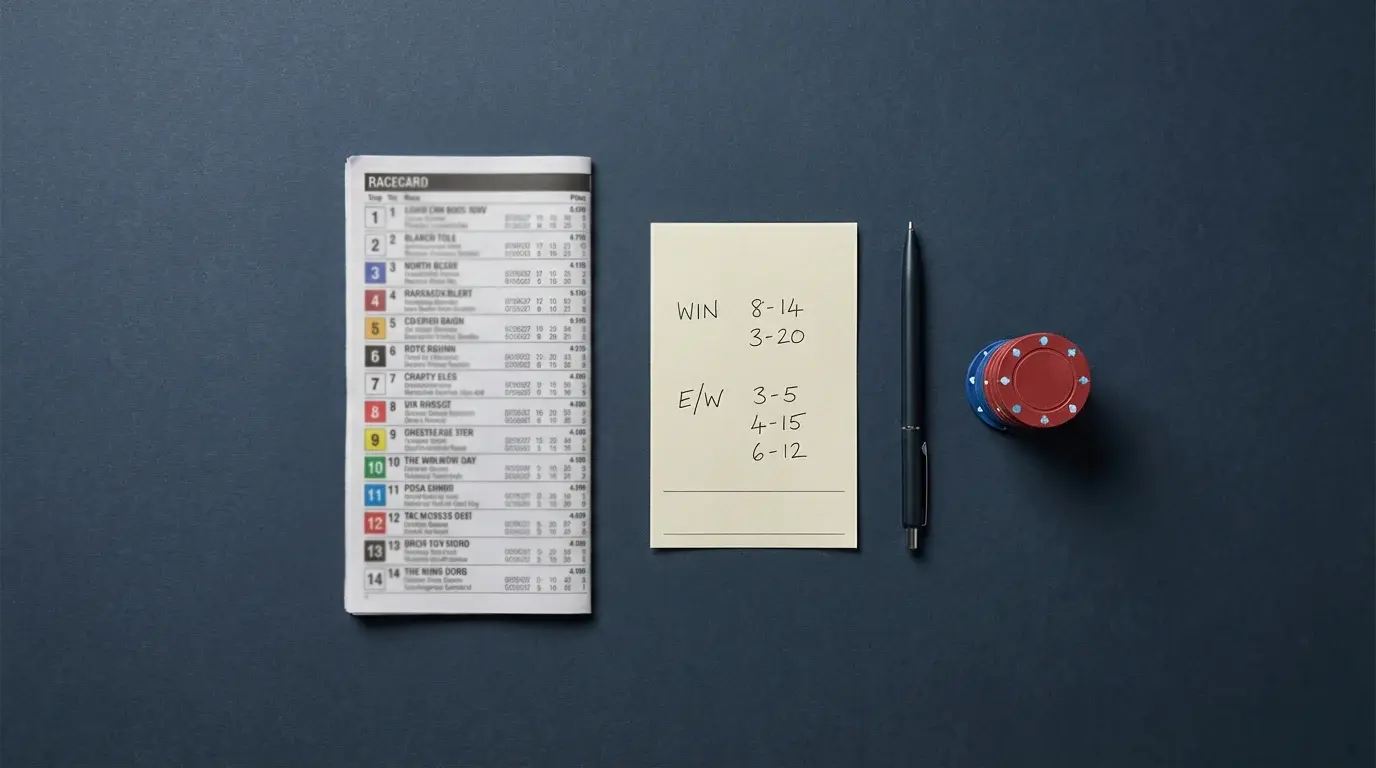
An each-way bet is two bets in one: a win bet at full odds and a place bet at a fraction of the odds. When you stake £10 each-way, your total outlay is £20 — £10 on the win and £10 on the place. In greyhound racing, the standard place terms are 1/4 the win odds for the first two finishers.
If your dog wins, both parts pay out — you receive the full win odds on the first £10 and the place fraction on the second. If it finishes second, the win part loses but the place part returns. If it finishes third or lower, both halves lose. The arithmetic favours each-way at longer prices: a dog at 10/1 each-way pays 5/2 for a place, meaning a second-place finish still delivers a net profit on your total £20 outlay. At shorter prices — anything below about 5/1 — the place return on a second-place finish doesn’t fully offset the lost win stake, making each-way a negative-value proposition.
Each-way is the workhorse bet of Derby night. The six-runner fields, competitive form, and unpredictable first-bend dynamics make it a natural fit for punters who want exposure to a dog’s chances without the all-or-nothing risk of a straight win bet. For mid-priced selections in the 5/1 to 12/1 range, each-way provides the best balance between potential reward and downside protection.
Forecast and Tricast Bets
A straight forecast requires you to predict the first and second finishers in exact order. If you name dog A first and dog B second, both must finish precisely in those positions for the bet to win. The payout is calculated after the race based on the starting prices of both dogs, and returns vary widely — from around 15/1 for two favourites finishing as expected to several hundred to one when outsiders fill the places.
A reverse forecast covers both possible orderings of your two selections (A-B and B-A) but costs double the unit stake. It’s the practical choice when you believe two dogs will fill the first two positions but can’t separate them. Combination forecasts extend this further, allowing you to select three or more dogs and cover every possible pairing. Three dogs produce six permutations; four dogs produce twelve. The cost scales with coverage.
Tricasts add a third dimension — you’re predicting first, second, and third in exact order. In a six-runner greyhound race, there are 120 possible tricast combinations, and the payouts reflect that difficulty. Even relatively fancied tricast combinations in Derby finals routinely pay 50/1 or higher. Combination tricasts cover all orderings of your selected dogs: three dogs cost six units, four dogs cost twenty-four.
These bet types reward punters who can read a race tactically — not just which dogs are fastest, but how they’ll interact with each other based on trap draw, running style, and early pace. A six-dog Derby final is one of the best races in the sport for intelligent forecast and tricast betting because weeks of knockout form give you unusually detailed information about each runner.
Accumulators, Specials, and Exotic Markets
An accumulator combines multiple selections across different races into a single bet, with the returns from each winner rolling into the stake on the next. A four-fold accumulator on four Derby heats requires all four selections to win for the bet to pay out. The potential returns are significantly higher than backing each dog individually, but so is the risk — one loser kills the entire bet.
Bookmakers frequently offer accumulator boosts and insurance on Derby night. Acca boosts add a percentage to your winnings — typically 10% to 50% depending on the number of legs — while acca insurance refunds your stake if one leg lets you down. Both promotions shift the maths in the punter’s favour and are worth factoring into your Derby-night staking plan.
Special markets appear around the Derby that aren’t available for everyday greyhound meetings. These include outright winner (ante-post and on-the-night), top trainer, winning trap colour, without the favourite, and first past the first bend. Some bookmakers offer novelty markets like winning distance or whether the final time will be over or under a specified threshold. These specials vary between operators — check multiple bookmakers in the days before the final to see the full range.
Match the Bet to the Situation
The best punters don’t have a favourite bet type — they have a toolkit and choose the right implement for each race. A competitive Derby heat with a clear form pick calls for a win bet. A final with three closely matched contenders suits each-way or a combination forecast. A full card of heats with several strong opinions is prime territory for a small accumulator with a boost applied. Also explore our how to bet on the greyhound Derby UK.
The common mistake is defaulting to the same bet regardless of circumstances. A punter who backs every dog to win at any price is leaving value on the table when each-way terms are generous. One who plays forecasts on every race is burning stakes in heats where a simple win bet is the sharper play. Let the race tell you what bet to place, not habit. That flexibility, more than any single wager, is what turns a night at the dogs from entertainment into an exercise in informed decision-making.
